


Tax Day Countdown and Important Tax Deadlines!
Learn moreEssential Year End Checks for Small Business Owners
Year-end planning gives small business owners a clear view of what happened financially, what needs to be cleaned up, and what should be handled before tax season. The goal is not just to close the books, but to protect cash flow, support accurate business tax preparation, and enter the new year with fewer surprises. These year end checks for small business owners can help you organize records, spot problems early, and make smarter decisions with your numbers.
What should small business owners check before year-end?
Small business owners should review bookkeeping, reconcile accounts, organize tax documents, evaluate cash flow, confirm payroll records, examine deductible expenses, and set realistic financial goals before the year closes. These steps help turn scattered financial activity into reliable information. When your small business finances are current and complete, your tax preparer can work more efficiently and you can make decisions based on facts instead of guesswork.
A useful year-end review starts with the basics: money in, money out, what customers owe you, what you owe vendors, and whether your records match your bank and credit card activity. From there, you can look at bigger-picture questions, such as whether profit margins improved, whether spending supported growth, and whether the business has enough cash to handle the first few months of the new year.

Clean up bookkeeping before anything else
Accurate bookkeeping is the foundation of every other year-end task. If transactions are missing, duplicated, miscategorized, or sitting in suspense accounts, your reports may give you the wrong picture. That can affect tax planning, budgeting, loan applications, and daily operating decisions.
Start by reviewing every account used by the business, including checking accounts, savings accounts, credit cards, payment processors, loans, and lines of credit. Make sure all transactions through the end of the year are recorded in your accounting system. If you use accounting software, check whether bank feeds have stopped syncing or whether uncategorized transactions have been piling up.
Pay special attention to categories that often become messy during the year. Meals, travel, software subscriptions, office supplies, contractor payments, equipment purchases, owner draws, and personal reimbursements can easily be recorded inconsistently. Cleaning these up now makes business tax preparation easier and helps reduce back-and-forth with your accountant.
A practical bookkeeping cleanup checklist includes:
Review uncategorized transactions. Assign each item to the correct income, expense, asset, liability, or equity account.
Look for duplicates. Imported bank transactions and manually entered expenses can sometimes appear twice.
Separate personal and business activity. If personal charges entered the business account, record them correctly rather than leaving them as business expenses.
Confirm loan balances. Principal and interest should be recorded separately so liabilities and expenses are accurate.
Check large or unusual entries. A single misplaced transaction can distort profit, cash flow, or tax estimates.
This work may feel tedious, but it prevents bigger problems later. Clean books give you a reliable starting point for every year-end financial decision.
Reconcile bank, credit card, and payment accounts
Reconciliation confirms that your accounting records match outside account statements. It is one of the most important year end checks for small business owners because it catches missing deposits, duplicate payments, merchant fee issues, and uncleared transactions. Without reconciliation, your profit and cash balances may look better or worse than they really are.
Reconcile each bank account through the final statement date available. Then do the same for credit cards, loans, and digital payment platforms used by the business. If you accept payments through processors or online marketplaces, make sure gross sales, processing fees, refunds, and deposits are recorded properly.
Do not ignore old uncleared checks or deposits. A check that has not cleared for months may need follow-up with the vendor. A deposit that appears in the books but not in the bank may point to a data entry error. These small mismatches can become frustrating during tax season if they are not resolved early.
If reconciliation reveals a mismatch, avoid forcing the account to balance with a vague adjustment unless you understand the reason. Review bank statements, receipts, invoices, and transaction histories first. A clean reconciliation trail helps protect the accuracy of your financial statements.
Review accounts receivable and overdue invoices
Year-end is a good time to look closely at money customers owe you. Accounts receivable can make revenue look strong while cash remains tight. If invoices are overdue, your financial statements may not reflect the practical pressure on your business.
Run an accounts receivable aging report and sort balances by how long they have been outstanding. Recent invoices may simply need normal follow-up, but invoices that are 60, 90, or more days past due deserve immediate attention. Contact customers, confirm whether invoices were received, and document payment plans where needed.
For seriously uncollectible amounts, speak with a tax professional before writing them off. The accounting and tax treatment can depend on how your business records income and the circumstances around the unpaid invoice. The key is to identify problem receivables before the year closes, not when you are already trying to file taxes.
Strong receivables management also improves cash flow planning. If you know which customers are likely to pay late, you can adjust spending, delay nonessential purchases, or build a more realistic cash reserve.
Review accounts payable and vendor records
Accounts payable deserves the same attention. Review unpaid bills, vendor statements, recurring subscriptions, and any expenses that were incurred but not yet entered. Missing bills can understate expenses and overstate profit, which affects both planning and tax preparation.
Contact vendors if balances do not match your records. Sometimes a payment was applied to the wrong invoice, a credit memo was missed, or a bill was sent to the wrong contact. Resolving these issues before year-end helps preserve vendor relationships and prevents unexpected cash demands later.
This is also a good time to review vendor information. Confirm legal names, mailing addresses, tax identification details, and payment totals for contractors who may need annual tax forms. If you wait until filing deadlines are near, it can be much harder to collect missing information.
How can year-end planning improve tax preparation?
Year-end planning improves business tax preparation by giving your accountant complete records, accurate financial statements, and enough time to discuss potential tax moves before deadlines arrive. Instead of scrambling for receipts and statements, you can review deductions, income timing, payroll records, and entity-specific issues while there is still room to act. That preparation can reduce stress and may help you avoid missed deductions or preventable errors.
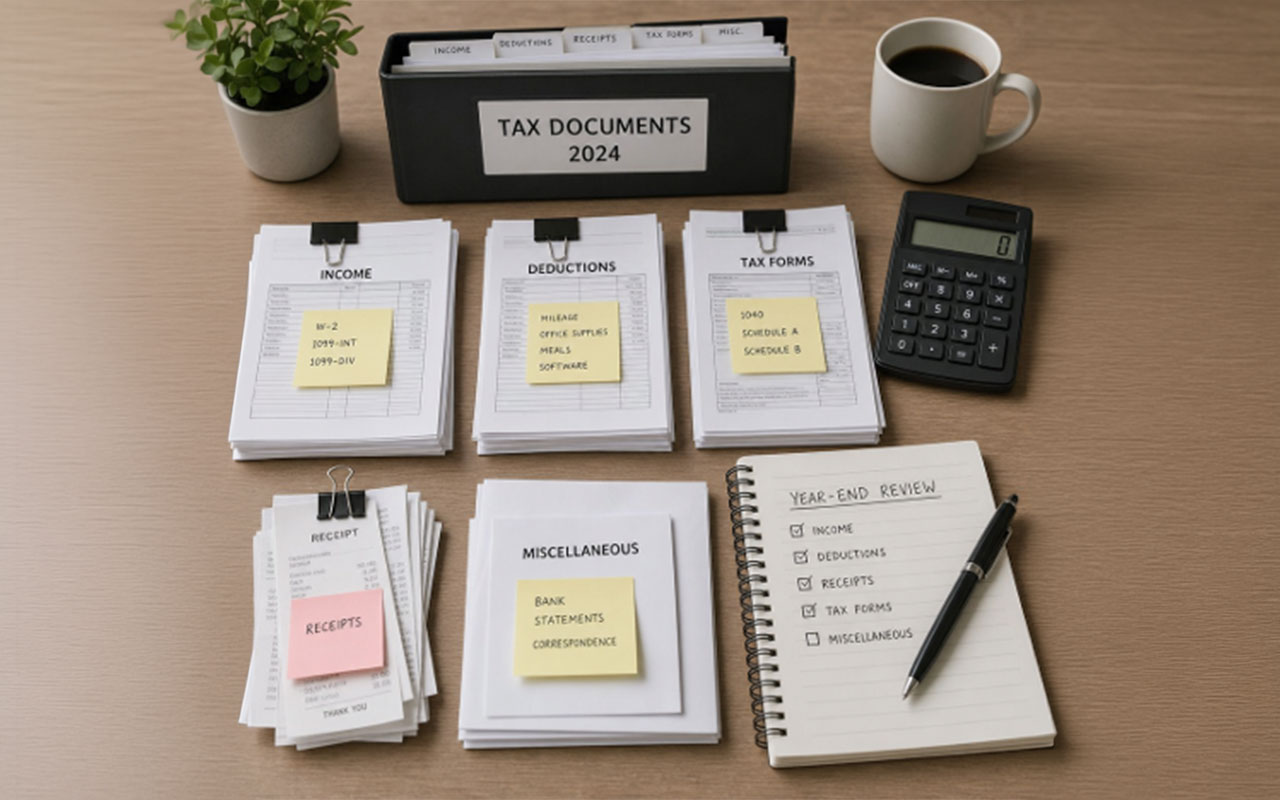
Begin by gathering the documents your tax preparer is likely to request. These may include income statements, balance sheets, bank statements, credit card statements, payroll reports, loan statements, sales tax filings, asset purchase records, mileage logs, receipts, and prior-year tax returns. If your records are digital, organize them into clearly labeled folders so they are easy to share.
Next, review common deductible expense categories. Office supplies, software, professional fees, advertising, business insurance, travel, education, equipment, employee benefits, and certain vehicle or home office expenses may be relevant depending on your situation. Do not assume every expense qualifies, and do not guess at tax treatment. Use your year-end review to flag questions for a CPA or qualified tax adviser.
Possible year-end tax planning topics to discuss include:
Equipment or technology purchases. Buying needed assets before year-end may affect deductions, but timing and eligibility rules matter.
Revenue timing. In some cases, the timing of invoicing or collections may influence taxable income, depending on accounting method and tax rules.
Retirement plan contributions. Business owners may have options that require planning before certain deadlines.
Charitable giving. Donations should be documented properly and aligned with applicable tax rules.
Estimated taxes. Reviewing year-to-date profit can help determine whether estimated payments are on track.
The best tax planning is practical, not rushed. Make decisions because they support the business, then consider the tax impact with professional guidance.
Compare budget, actuals, and profitability
A year-end review is not complete until you compare what you expected to happen with what actually happened. Budget versus actual reporting shows whether revenue, expenses, and profit followed the plan. It also helps explain why results changed.
Start with revenue. Did sales come from the products, services, customers, or channels you expected? If revenue grew, did profit grow with it, or did costs rise just as quickly? If revenue declined, was the issue seasonal demand, pricing, customer churn, delayed projects, or limited capacity?
Then review expenses. Some increases may be healthy, such as investing in better tools, marketing, or staff support. Others may indicate waste, overlapping subscriptions, unnecessary fees, or weak purchasing controls. The goal is not to cut every cost, but to understand whether spending is producing value.
Profitability should be reviewed at both the business-wide and category level when possible. A company can appear busy while still earning too little from certain services or products. Year-end numbers can reveal where pricing, scope, staffing, or delivery methods need adjustment.
Use this review to create a more realistic budget for the new year. Instead of copying last year’s numbers, build a plan around actual patterns, known obligations, expected investments, and conservative revenue assumptions.
Strengthen cash flow before the new year
Profit and cash flow are related, but they are not the same. A profitable business can still struggle if customers pay late, inventory ties up cash, debt payments are high, or seasonal slowdowns arrive before reserves are built. That is why cash flow deserves its own year-end check.
Review your cash flow statement or, at minimum, compare monthly cash inflows and outflows across the year. Look for patterns. You may notice that certain months require extra payroll, insurance payments, inventory purchases, tax deposits, or loan payments. You may also see that customer payments slow down during specific seasons.
Once you understand the pattern, plan for it. Build or refresh a cash reserve target. Consider whether a line of credit, tighter invoice follow-up, better payment terms, or revised purchasing schedule would reduce pressure. If growth is planned, estimate the cash needed before new revenue arrives.
A simple cash flow review can answer practical questions:
Which months were tightest, and why?
Which customers or projects created payment delays?
Which fixed costs must be covered even during slow periods?
Are upcoming tax payments, bonuses, renewals, or insurance premiums already planned for?
Does the business need to change payment terms or deposit requirements?
Cash flow planning gives you more control. It helps you make decisions before pressure forces them.
Confirm payroll, contractor, and employee records
Payroll mistakes can create compliance problems and damage employee trust. Before year-end, verify that employee information is current, wages and benefits are recorded correctly, payroll taxes have been paid or scheduled, and any bonuses or reimbursements are properly classified. If your business has employees in multiple jurisdictions, confirm that payroll records reflect the correct locations and requirements.
Review contractor payments as well. Businesses often rely on freelancers, consultants, and service providers throughout the year, then discover too late that they are missing tax forms or identification details. Collecting this information before deadlines approach makes reporting smoother.
Employee classification is another important area. Workers should be classified correctly based on the nature of the relationship and applicable rules, not convenience. If you are unsure whether someone should be treated as an employee or contractor, raise the issue with a qualified professional.
For businesses with owner-employees, including certain corporation structures, year-end payroll and benefit treatment can be especially important. Do not assume that owner draws, distributions, wages, health insurance, or retirement contributions are interchangeable. Ask your accountant how these items should be handled for your entity type.
Use technology to reduce year-end stress
Cloud-based accounting tools can make year-end checks easier when they are used consistently. Platforms such as QuickBooks, Xero, Wave, or similar systems can import bank activity, categorize recurring transactions, generate reports, attach receipts, and support reconciliation. The software is not a substitute for review, but it can reduce manual work and make errors easier to find.
If your system has been neglected, year-end is a natural time to improve it. Set up bank rules carefully, connect all relevant accounts, clean up the chart of accounts, and remove outdated categories that confuse reporting. Make sure users have appropriate access and that important documents are stored securely.
Good technology habits include:
Uploading receipts when expenses occur, not months later.
Matching payments to invoices instead of recording duplicate income.
Reviewing automated categories before accepting them.
Running monthly reports so problems do not wait until December.
Backing up or exporting key financial reports at year-end.
Automation helps most when paired with consistent oversight. A few minutes each week can prevent hours of cleanup later.
Set financial goals that reflect the numbers
Once the books are clean, the reports become useful for planning. Review revenue, gross margin, net profit, cash flow, debt, owner compensation, and tax obligations. Then turn those numbers into goals that are specific enough to guide decisions.
For example, instead of saying you want to “grow revenue,” identify which services, products, or customer segments should grow and what resources that growth will require. Instead of saying you want to “spend less,” decide which costs can be reduced without weakening operations. Instead of hoping for better cash flow, set invoice follow-up rules, reserve targets, and purchasing limits.
Your year-end review should also influence operational goals. If bookkeeping took too long, schedule monthly reconciliations. If payroll records were messy, improve onboarding and documentation. If tax season was stressful, create a quarterly meeting rhythm with your adviser.
The point is to make small business finances more usable. Numbers should not sit in reports that no one reads. They should help you decide what to continue, what to fix, and what to stop doing.
A simple year-end financial checklist
Use this checklist as a practical starting point. Adapt it to your business size, industry, and entity structure.
Reconcile all bank, credit card, loan, and payment processor accounts.
Review uncategorized, duplicate, or unusual transactions.
Organize receipts, invoices, statements, mileage records, and tax documents.
Run profit and loss, balance sheet, cash flow, accounts receivable, and accounts payable reports.
Follow up on overdue invoices and review potentially uncollectible balances.
Confirm vendor records and contractor payment totals.
Verify payroll records, employee information, benefits, and payroll tax payments.
Review deductible expenses and tax planning questions with a professional.
Compare budgeted results with actual revenue, expenses, and profit.
Identify cash flow pressure points and plan reserves for the new year.
Review subscriptions, insurance policies, debt terms, and recurring expenses.
Set financial goals based on actual results rather than assumptions.
You do not have to complete every item in one sitting. Schedule focused blocks of time, start with reconciliation, and work toward reports your accountant can trust.
The takeaway for a cleaner close
Year-end financial work is easier when you treat it as a business health review, not just a tax chore. Clean records, reconciled accounts, organized documents, and thoughtful planning can reduce tax-season stress while giving you a stronger view of your business.
The most effective year end checks for small business owners are practical and repeatable. Review what happened, fix what is unclear, ask for professional guidance where the rules matter, and use the results to plan the next year with confidence. When your small business finances are organized, you are better prepared for tax time and better equipped to make decisions that support long-term stability.