Tax Day Countdown and Important Tax Deadlines!
Learn moreDIY Bookkeeping and When to Hire a Bookkeeper
By: Flat Top Accounting Solutions

If you spend your evenings categorizing transactions and still can’t pull a current profit and loss statement, it’s time to rethink how you handle your books. Doing your own bookkeeping can work well when transactions are simple and you have time to keep up. As the business grows, pay attention to how much time the work takes, how reliable the reports are, and what decisions depend on them.
In Episode 7 of Climbing the Numbers, Tyler Roberts and Mark Walkenhorst discuss how to tell when you’ve outgrown DIY bookkeeping and what kind of help makes sense for your business.
Set Up Your Books Before Your First Sale
Start with a dedicated business bank account and keep personal and business spending separate. Choose bookkeeping software and a chart of accounts that reflects how you earn and spend money. Set a monthly date to reconcile your bank and credit card accounts, and create a routine for saving receipts, invoices, and statements.
If you expect to run payroll, carry inventory, collect sales tax, or pay contractors, decide early how you’ll track those activities. A one-time setup or periodic review can help you establish a routine while you continue handling day-to-day transactions.
Five Signs You Have Outgrown DIY Bookkeeping
There’s no revenue threshold that tells you when to hire a bookkeeper. Look for these patterns in the way your business operates.
1. Bookkeeping eats into work time. You’re catching up after hours or postponing sales calls, customer follow-ups, or other work to get the books done.
2. The books are routinely behind. Accounts go unreconciled month after month, and gathering reliable records at tax time turns into a cleanup project.
3. You question the reports. Loan balances look wrong, expenses are hard to explain, or you’re unsure how much profit the business is making.
4. The business has become more complex. New employees, locations, sales channels, loans, or inventory add work and make errors harder to spot.
5. Bigger decisions depend on timely numbers. Hiring, expanding, or applying for financing requires a clearer picture of profit and cash flow.
What Doing Your Own Books Costs
Suppose you spend eight hours a month on bookkeeping and estimate that you could put those hours toward work worth $100 an hour. That’s $800 in potential value. If a bookkeeper charges $500 for the work you’d hand over, the difference is $300 in this example. It’s an opportunity-cost estimate that depends on what you can realistically do with the recovered time and what the fee covers.

When you run your own numbers, include time spent correcting mistakes or catching up. Also consider what late reports keep you from seeing, like rising costs that should inform your pricing.
Choose the Right Level of Bookkeeping Support
The right arrangement depends on who can handle the work reliably, how quickly you need answers, and how closely bookkeeping overlaps with daily operations.
DIY bookkeeping. A practical option when transactions are simple and you can consistently reconcile accounts and review reports.
DIY with professional review. Keep up with routine entries and bring in a professional periodically to review reconciliations and flag issues.
Outsourced bookkeeping. An outside team handles agreed tasks such as month-end reconciliations and reporting.
In-house bookkeeper. A dedicated employee can make sense when frequent transactions or day-to-day coordination justify the role. Factor in training and coverage.
Hybrid bookkeeping. Your staff can handle invoices and bills while a professional manages reconciliations, reporting, and oversight.

What to Ask Before Hiring a Bookkeeper
Start with an assessment of the current books. Identify the last month you reconciled, flag any balances you can’t explain, and ask whether past months need cleanup. Then agree on who handles each task, how documents will be shared, and which reports you’ll receive.
Which tasks will you handle, and which will stay with me or my team?
When will you reconcile the accounts and deliver monthly reports?
How will you reach out when a transaction needs clarification?
What to Review at Your Next Monthly Close
Check how much time the close took, whether the accounts reconcile, and what your reports tell you about profit and cash flow. If the same problems keep coming up, start by getting help with the task that causes the most delay or uncertainty.
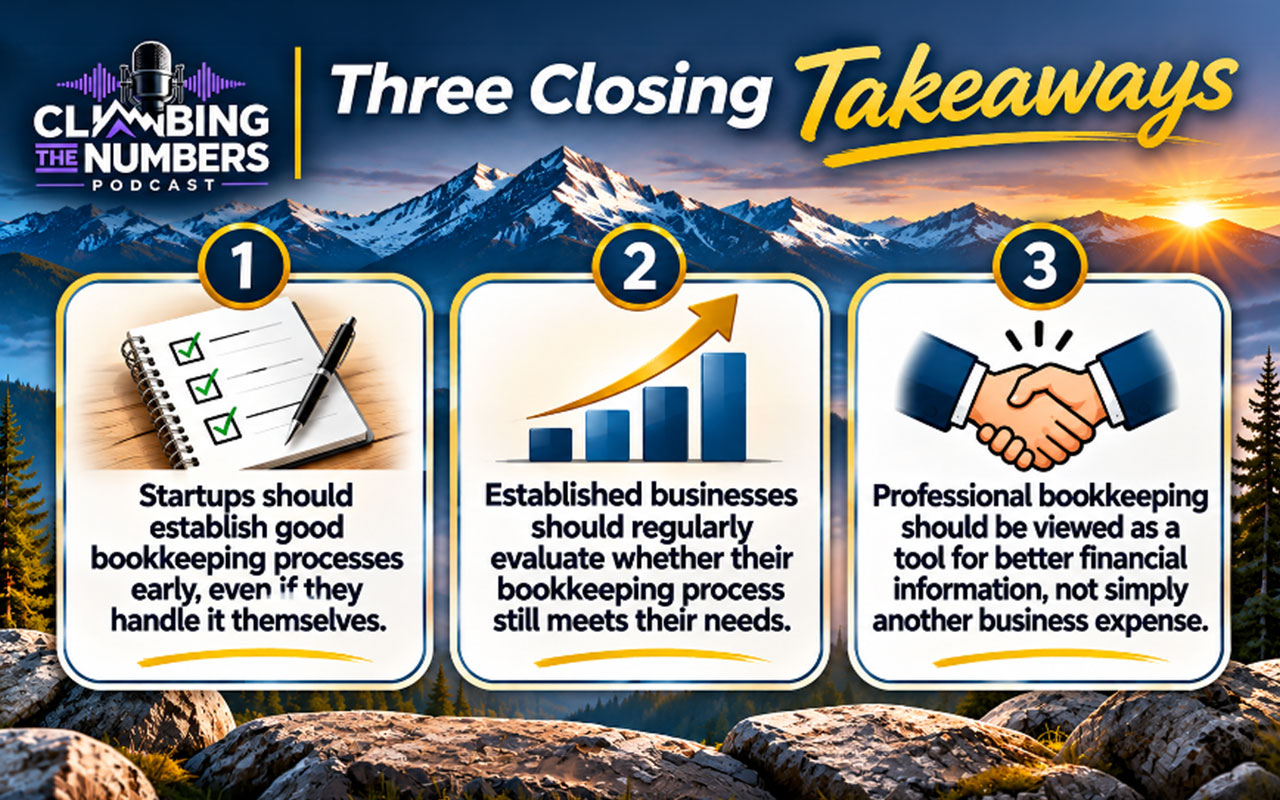
Next on Climbing the Numbers
In Episode 8, Tyler and Mark walk through building your 2027 business budget. Bring your financial statements and work through revenue forecasts, planned expenses, and realistic goals for the year ahead.