


Tax Day Countdown and Important Tax Deadlines!
Learn moreHow to Build a 2027 Small Business Budget
By: Flat Top Accounting Solutions
If you’re hosting Thanksgiving dinner, you count the guests before you shop. A 2027 small business budget starts with the same kind of preparation. Look at what your business actually earned and spent, decide what you want to accomplish next year, and check when the money will move in and out of your bank account.
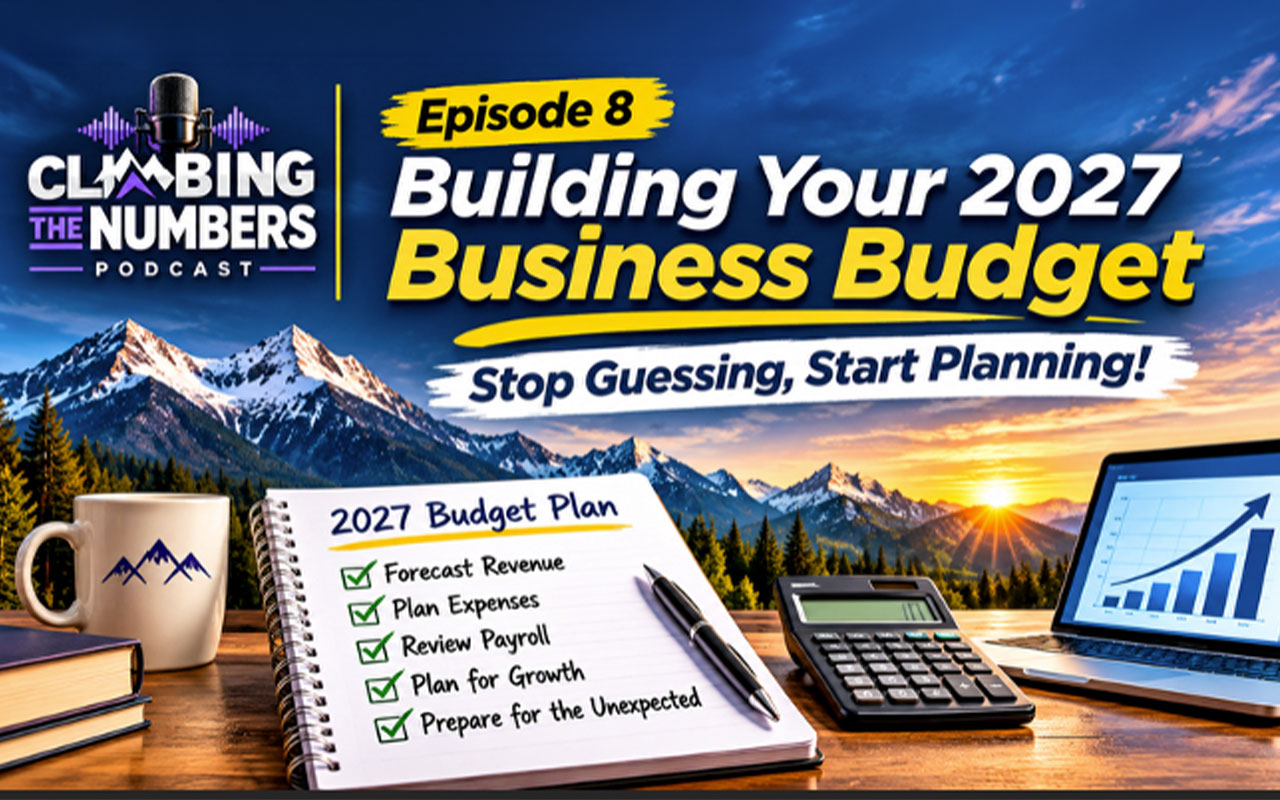
On Thanksgiving week, Tyler Roberts and Mark Walkenhorst used that dinner-planning analogy to explain how to build a budget you can use all year. Their Episode 8 discussion covers seven budget categories, a $500,000 revenue example, and how to decide whether there’s room to hire or expand.
Start With Your 2026 Financial Reports
Pull your monthly profit and loss statement, your latest balance sheet, and your bank balances. Use the months you’ve closed and estimate the months still open. Review unpaid invoices and upcoming bills if customers or vendors pay on terms. Mark one-time items, seasonal swings, and changes you already expect in 2027, such as a rent increase or a large contract ending.
Pick one goal the budget needs to support. If you want to hire by July, for instance, give that hire a start date, a monthly cost, and a minimum cash balance you want to maintain after payroll.
Seven Parts of a Small Business Budget
1 Forecast Monthly Revenue
Start with last year’s monthly sales, repeat customers, signed work, and realistic new business. Build the forecast using something you can track, such as active clients multiplied by average monthly fees or jobs completed multiplied by average job price. Account for busy and slow months. Note which assumptions depend on work you haven’t booked yet.
2 Estimate Direct Costs and Gross Profit
Budget the costs tied to delivering what you sell, such as materials, inventory, or job-specific subcontractors. Separate these from overhead and check whether vendor prices or your sales mix will change. Revenue minus direct costs gives you gross profit, the amount available to cover the rest of your operating expenses.
3 Include the Full Cost of Payroll
List wages, employer payroll taxes, benefits, and planned raises or bonuses. If you expect to hire, budget from the month the employee starts and include recruiting, training, and equipment where applicable. If some labor is already counted in direct costs, keep it there and avoid counting it twice.
4 Schedule Overhead and Irregular Bills
Enter rent, insurance, software, utilities, and professional fees. Put annual renewals and other irregular payments in the months they’re due for cash planning. Check which subscriptions you still use and flag expenses that may rise even if sales stay flat.
5 Build a Monthly Cash Flow Forecast
Start with beginning cash, add expected collections, and subtract cash payments. Include cash uses such as loan principal, equipment purchases, and any planned owner draws. Carry each month’s ending balance into the next month. If you invoice in March and expect payment in May, show the cash arriving in May.
6 Make Space for Growth
Give planned investments their own lines. For a new hire, marketing campaign, or equipment purchase, list the cost, the timing, and the result you expect. Decide what would have to be true before you commit, such as a backlog of signed work or a minimum cash balance.
7 Set a Cash Reserve Target
Choose a reserve based on the bills you must cover, the length of your slow season, and how quickly customers pay. Give the reserve a specific dollar target and budget when you’ll add to it. Track your actual cash balance alongside the target each month.
A Small Business Budget Example
In Episode 8, we use a business with $500,000 in projected annual sales, $350,000 in gross profit, and $80,000 in operating profit. Here’s what happens if sales come in 10 percent below plan and costs stay at the budgeted level.
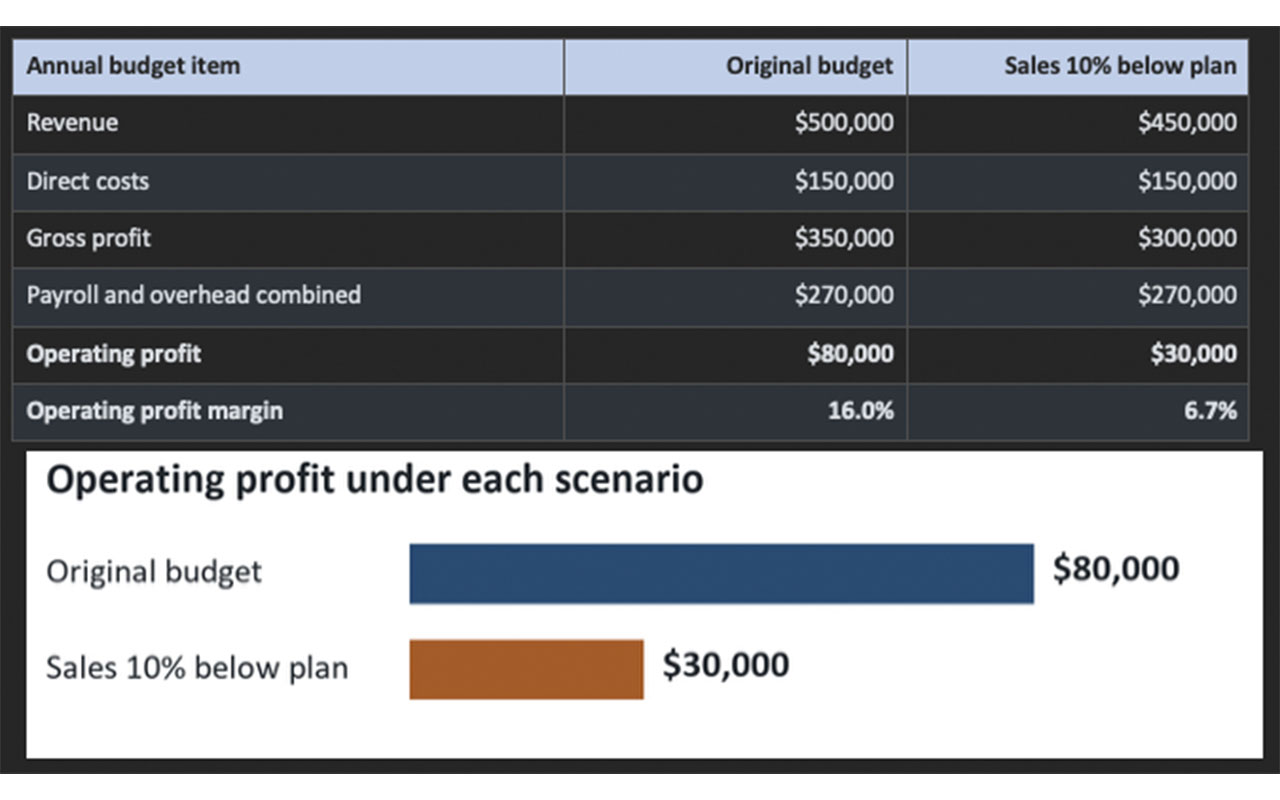
In this scenario, a $50,000 sales shortfall cuts projected operating profit by $50,000. If some costs fall with sales, update those lines in your downside forecast. Run a separate scenario for rising costs, too. Materials or payroll can squeeze profit even when sales meet expectations.
Can the Budget Support a New Hire
Estimate the full cost of the role and the additional revenue needed to cover it. If a hire costs $60,000 a year and the business keeps 60 cents of each additional sales dollar after other variable costs, the hire needs $100,000 in additional annual sales to break even in this example. Check the first few months separately, since payroll can come due before customers pay.
Watch the budget example in Episode 8
Review Budget vs Actual Results Monthly
Once your books are closed for the month, compare actual results with your budget. Start with revenue, gross profit, payroll, overhead, and ending cash. Look at the size of each difference and ask what caused it. A customer paying late calls for a different response than consistently selling fewer jobs than planned.
Keep the original budget. Use it to see where results differ from what you expected. Update a separate forecast for the rest of the year when prices, sales volume, staffing, or payment timing change.
Choose an action and a date. If collections are slow, follow up on the oldest invoices and update expected receipt dates. If margins are tight, check whether material prices rose or jobs took longer than estimated. Revisit the action at your next monthly review.
Small Business Budgeting Questions
What should I include in a business budget?
Plan revenue, direct costs, payroll, and overhead by month. Add a cash forecast that shows when bills, collections, debt payments, and major purchases hit the bank. Include specific goals for growth and reserves.
Can my business be profitable and still run low on cash?
Yes. Customers may pay after payroll is due, or a large equipment purchase or loan principal payment may draw down cash. A monthly cash flow forecast helps you see the gap before the bills come due.
How often should I update my business forecast?
Review results each month and update the forecast when an assumption materially changes. If cash is tight or receipts are unpredictable, check upcoming collections and payments weekly.
Watch Episode 8 of Climbing the Numbers
Bring your latest profit and loss statement and follow along with Tyler and Mark. Watch Episode 8 on YouTube.
If you’d like help turning your bookkeeping reports into a budget you can review each month, connect with Flat Top Accounting Solutions. Happy Thanksgiving from our team to yours.